Underlying inflation measures for Germany
Bundesbank Technical Paper
Important links
Abstract
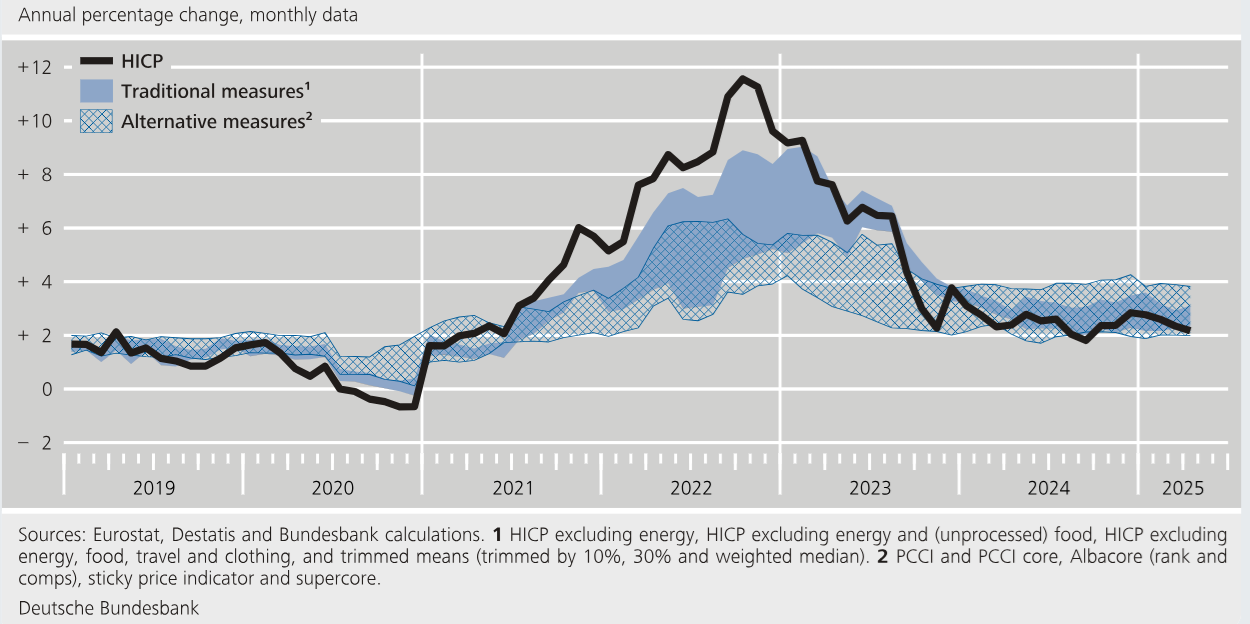
In this paper, we evaluate a set of measures of underlying inflation for Germany using conventional measures, such as core inflation (excluding energy and food items), and alternative measures based on econometric models, machine learning, and micro-price evidence. We compare these measures through detailed in-sample and out-of-sample evaluations. The alternative measures exhibit lower volatility, minimal bias, and superior out-of-sample forecasting accuracy performance. While we find no evidence that any single measure clearly outperforms the others over time, the range of alternatives measures also reflects a somewhat earlier uptick and downturn in light of the recent inflation surge in comparison to traditional ones. In addition, all measures under consideration are highly sensitive to monetary policy shocks.
Key figures
Underlying Inflation Measures
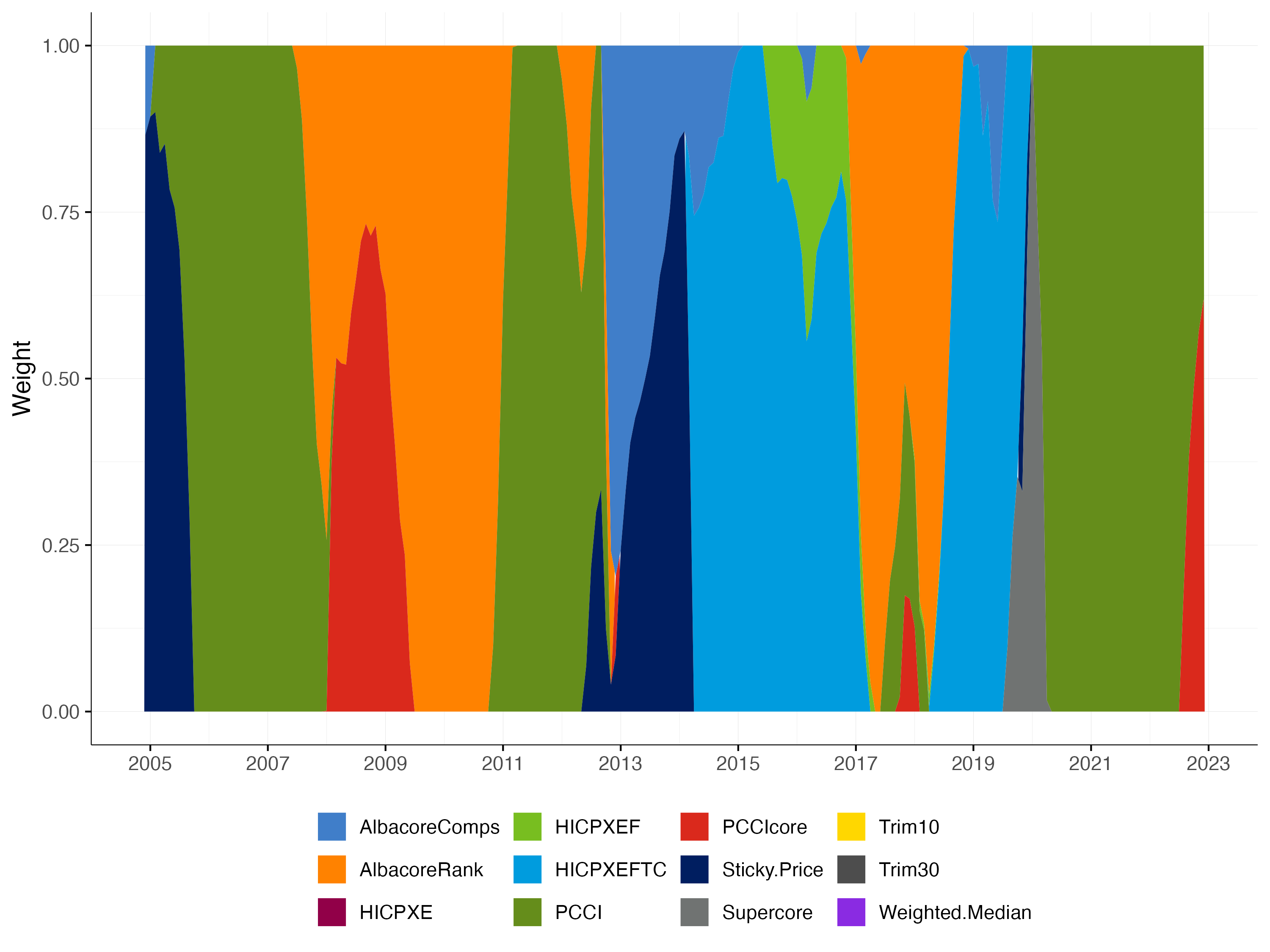
Weights
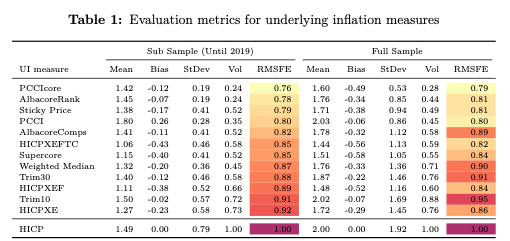
Evalutions
LaTeX
@article{ciftciunderlying,
  title={Underlying inflation measures for Germany},
  author={Ciftci, Muhsin and Wieland, Elisabeth},
    journal = {Deutsche Bundesbank Technical Papers},
    year = {2025},
    publisher = {Deutsche Bundesbank},
    url = {https://www.bundesbank.de/resource/blob/971960/64a5d67acbc7b0f46508cf8678f4cf8f/472B63F073F071307366337C94F8C870/2025-04-technical-paper-data.pdf}
}
Word
Ciftci, M. and E. Wieland (2025), Underlying Inflation Measures for Germany, Bundesbank Technical Paper